
Between Constitutional Promise and the Politics of Memory

South Africa’s 2026 Human Rights Day marked both a symbolic and substantive milestone: thirty years since the adoption of one of the world’s most progressive constitutions. In Kimberley, President Cyril Ramaphosa delivered a keynote address that followed a familiar pattern—celebratory in tone, yet tempered by recognition of enduring socio-economic challenges. Framed under the theme “A Legacy of Courage: Protecting Rights, Preserving Humanity,” the speech emphasised unity, constitutionalism, and the ongoing need to translate formal rights into lived realities. Yet, as with many national commemorations, what was omitted proved as significant as what was included.
At one level, the President’s address aligned with broader post-apartheid political discourse. It reaffirmed the Constitution as South Africa’s “moral compass,” rooted in the liberation struggle and guiding the democratic project. It also acknowledged persistent inequality, unemployment, and poverty, noting that rights guaranteed on paper are not yet fully realised in everyday life. This dual emphasis on progress and unfinished transformation reflects a widely shared understanding: while South Africa has made significant gains since 1994, deep structural inequalities continue to shape citizens’ lived experiences. Expanded access to social grants, education, and basic services has improved millions of lives. However, these advances coexist with entrenched disparities. As some analyses suggest, South Africa’s human rights framework is “normatively robust but substantively fragile,” marked by a growing gap between constitutional ideals and social realities. This tension formed the backbone of the President’s speech and remains central to any meaningful reflection on Human Rights Day.

Beyond this familiar terrain lies a more contested issue: the politics of memory. Human Rights Day is not merely a celebration of democracy; it is rooted in the Sharpeville massacre of 21 March 1960, when police killed peaceful protesters opposing apartheid pass laws. This event, led by Robert Sobukwe and the Pan Africanist Congress (PAC), forms the historical foundation of the commemoration. Yet critics argue that this specific history is increasingly generalised in official narratives. In this year’s address, the President paid tribute to those who died in Sharpeville, but his focus remained on collective sacrifice and constitutional progress rather than on specific figures such as Sobukwe. While the victims were honoured, the political leadership and ideological diversity that shaped the protest received limited attention. For some observers, this reflects not an oversight but a broader pattern in how South Africa narrates its past.
Since 1994, the dominant liberation narrative has largely centred the African National Congress (ANC). While this reflects the ANC’s undeniable historical importance, it has also contributed to the marginalisation of other movements and leaders. Sobukwe, in particular, occupies a complex place in national memory. As a key architect of the anti-pass campaign and central figure in the events that gave rise to Human Rights Day, his relative absence from official commemorations raises important questions. Is this simply rhetorical economy, or does it reveal deeper political dynamics about whose histories are foregrounded? The choice of Kimberley as the host city adds further weight to this issue. The region is closely associated with Sobukwe’s life, including his years of banishment, and lies near his burial site. In this context, the lack of explicit recognition becomes harder to dismiss as incidental. Memory is not neutral; the way a nation narrates its past shapes both its present identity and its future trajectory. When certain figures or traditions are absorbed into broader, less specific narratives, it can create a sense of exclusion—particularly among communities who feel their contributions are underrepresented.
This critique does not invalidate the President’s emphasis on constitutionalism. The Constitution remains one of South Africa’s most significant achievements, with its commitments to dignity, equality, and socio-economic rights providing a powerful framework for addressing contemporary challenges. The President underscored this effectively, highlighting the participatory process through which the Constitution was created and describing it as a “people’s constitution.” He also emphasised the need for a capable and developmental state to translate rights into tangible outcomes, acknowledging governance weaknesses that have hindered progress. Structural inequality remains the defining challenge, with disparities in education, healthcare, and economic opportunity still reflecting apartheid-era patterns. Corruption further exacerbates these inequalities by diverting resources and undermining state capacity and public trust. At the same time, high levels of crime, gender-based violence, and vigilantism point to what some describe as a declining respect for human life, raising concerns about the social foundations of the human rights project.
In this context, the President’s call for collective responsibility across government, business, and civil society is both necessary and appropriate. His focus on combating corruption, addressing gender-based violence, and promoting inclusive growth acknowledges the complexity of South Africa’s challenges. Yet even as the speech addressed these pressing issues, the question of historical inclusivity remained unresolved. The tension between unity and specificity is not unique to South Africa. All nations must grapple with how to construct shared narratives from complex and contested pasts. There is a natural impulse to emphasise common ground—to highlight collective sacrifice rather than ideological division. However, this impulse carries risks. When historical narratives become overly generalised, they can obscure the diversity of experiences and contributions that shaped the struggle. This, in turn, can limit the extent to which different groups see themselves reflected in the national story.
In South Africa’s case, this is particularly significant. The transition to democracy was not the product of a single movement but of a broad coalition with diverse philosophies and strategies. Recognising this plurality is not merely about historical accuracy; it is essential for building an inclusive national identity. Human Rights Day therefore presents an opportunity not only to celebrate constitutional achievements but also to critically engage with how history is remembered. Such engagement does not require diminishing the role of any particular movement. Rather, it calls for a more expansive narrative—one that acknowledges the full spectrum of contributions to the liberation struggle. By doing so, it can strengthen the unity that official narratives seek to promote, rather than undermining it through omission.
At the same time, perspective is important. The absence of explicit references to certain figures does not negate the broader message of the day. The President’s speech articulated a clear vision of a society grounded in dignity, equality, and shared responsibility. It also confronted the uncomfortable reality that many South Africans have yet to experience these ideals in their daily lives. This honesty is crucial. As South Africa enters its fourth decade of democracy, the legitimacy of its constitutional order will increasingly depend on its ability to deliver tangible improvements. Rights must move beyond legal guarantees and become lived realities—reflected in access to employment, education, safety, and basic services. In this regard, the President’s emphasis on implementation and accountability is well placed.
However, achieving these goals will require more than policy commitments. It will demand a renewed social contract—one that combines effective governance with active citizenship and strong civil society engagement. It will also require confronting the deeper structural conditions that perpetuate inequality and violence. Ultimately, the significance of Human Rights Day lies in its dual function: remembrance and renewal. It is a moment to honour those who sacrificed for freedom, but also to assess progress and confront ongoing challenges. This year’s commemoration succeeded in reaffirming constitutional values, acknowledging persistent inequalities, and calling for collective action. Yet it also highlighted the enduring complexities of national memory.
If South Africa is to build a truly inclusive future, it must engage honestly with these complexities. This means not only celebrating shared achievements but also recognising the diverse histories that underpin them. Unity cannot be built on selective remembrance; it must be grounded in a willingness to confront the full richness—and difficulty—of the past. Only then can the promise of protecting rights be fully aligned with the responsibility of preserving history.
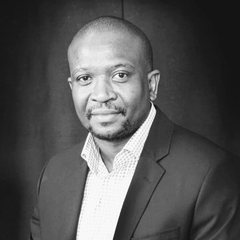
Bhekamachunu H. Zwelethu Mchunu
Co-founder of Welisa Academy. Academic, historian, heritage practitioner and public-sector development specialist. Read his profile


