When Education Stops Asking Questions, Democracy Starts to Fail

If democracy is meant to produce thinking citizens, then our education systems are doing a remarkably poor job of it. Across schools and universities, learning is increasingly reduced to performance metrics, compliance, and employability jargon. Students are trained to pass, to graduate, to “fit the market” – but not necessarily to think, question, or challenge power. This is not an accident. It is a political choice, dressed up as efficiency.
The late Neil Postman warned decades ago that education which stops asking questions becomes a form of indoctrination. Together with Charles Weingartner, he argued that the most dangerous student is not the disruptive one, but the unquestioning one – the learner trained to accept information without interrogating its origins, interests, or consequences. Today, that warning feels uncomfortably prophetic.
In South Africa, where education was once explicitly engineered to reproduce inequality, the promise of democratic schooling was supposed to be different. Yet the logic of control has simply changed its language. Apartheid’s racial hierarchy has been replaced by neoliberal efficiency. Surveillance now comes in the form of standardised testing, rigid curricula, and performance indicators. Obedience is still rewarded – it just looks more “professional”.
This is where Paulo Freire remains deeply relevant. His critique of what he called the “banking model” of education – where students are treated as empty vessels waiting to be filled – exposes the quiet violence of contemporary classrooms. When learners are denied voice, dialogue, and relevance, education becomes an exercise in domestication rather than liberation. Freire insisted that education either humanises or dehumanises; there is no neutral middle ground.
What makes Freire’s argument especially uncomfortable is that it implicates teachers, institutions, and policymakers alike. It forces us to ask: who benefits when students are trained to memorise rather than to think? Who gains when universities produce graduates who are skilled but silent, employable but politically anaesthetised?
The defenders of market-driven education will tell you this is simply realism. Students, they argue, need “skills”, not philosophy. Universities must “compete”. Schools must be “accountable”. But accountability to whom? And for what purpose?
This is precisely the question raised by Noam Chomsky, who has long argued that neoliberal education is less about learning and more about control. When education is treated as a private investment rather than a public good, its purpose narrows dramatically. Knowledge becomes a commodity. Students become customers. Teachers become service providers. And critical thought — inconvenient, disruptive, slow – becomes a liability.
The irony is that democracy itself depends on precisely the capacities this system undermines: critical literacy, historical awareness, moral reasoning, and the courage to dissent. A society cannot outsource its conscience to the market and expect freedom in return.
Long before Freire or Chomsky, John Dewey argued that democracy is not merely something you vote for – it is something you practice. Schools, he insisted, are not preparation for democratic life; they are democratic life. When classrooms silence experience, discourage disagreement, and prioritise control over curiosity, they model authoritarianism – no matter how progressive the curriculum claims to be.
Yet even critical pedagogy sometimes risks becoming overly mechanical, trapped in the language of struggle and resistance without attending to the inner life of the learner. This is where the quiet wisdom of Kahlil Gibran offers an unexpected intervention. Gibran wrote that the teacher does not give wisdom but “leads you to the threshold of your own mind”. In a system obsessed with delivery, outcomes, and mastery, this idea feels almost subversive.
Gibran reminds us that education is not only about power and politics, but also about meaning, imagination, and becoming. A learner who can critique capitalism but cannot listen, reflect, or imagine alternatives is not free – merely oppositional. True education must engage both the social and the inner worlds.
So where does this leave us?
It leaves us with uncomfortable truths. That many classrooms are still structured around fear – fear of failure, fear of authority, fear of deviation. That universities increasingly resemble corporations, with vice-chancellors as CEOs and students as revenue streams. That teachers are exhausted not because they ask too much of students, but because the system asks them to teach without autonomy, trust, or intellectual respect.
But it also leaves us with possibility.
An education that takes democracy seriously would look very different. It would value questions over answers. Dialogue over silence. Growth over ranking. Teachers would be recognised as intellectuals, not technicians. Students would be treated as thinking subjects, not data points. Failure would be understood as part of learning, not a moral and mental defect.
Most importantly, such an education would reclaim its ethical purpose: not merely to produce workers, but to cultivate citizens capable of judgement, empathy, and resistance.
When education stops asking questions, democracy is in trouble. But when classrooms become spaces of dialogue, courage, and imagination, education once again becomes what it was always meant to be – not preparation for life, but life itself.
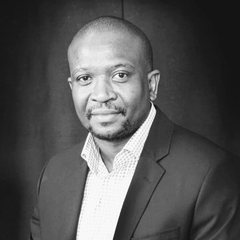
Bhekamachunu H. Zwelethu Mchunu
Co-founder of Welisa Academy. Academic, historian, heritage practitioner and public-sector development specialist. Read his profile


